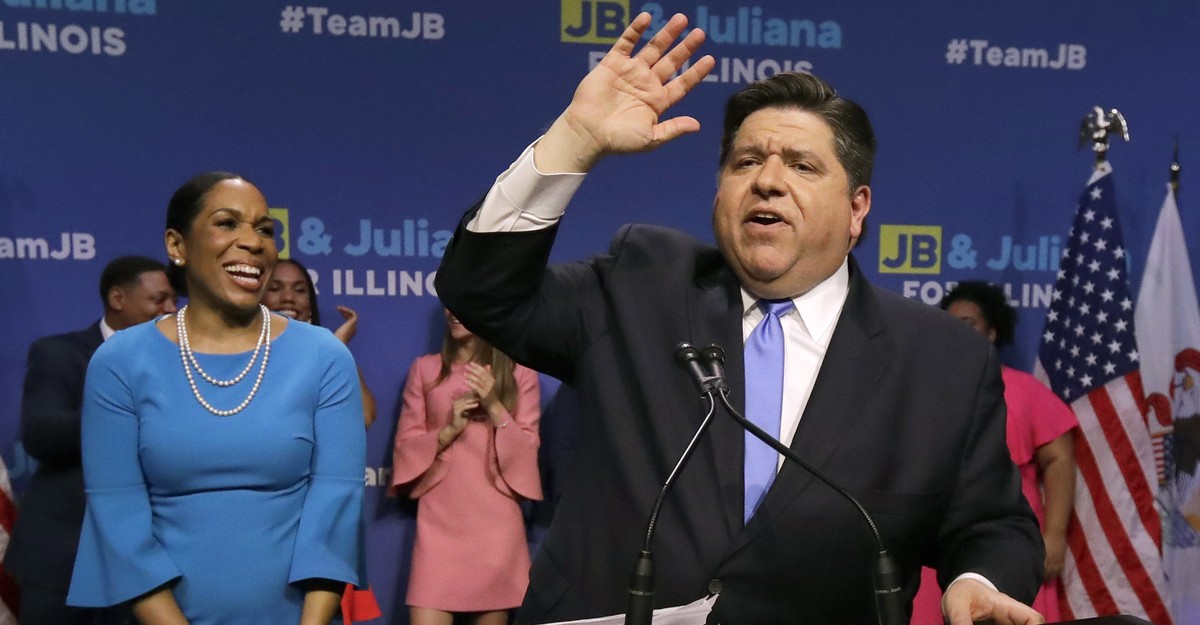
Illinois Governor 2026: A Deep Dive into the Pritzker vs. Bailey Rematch
As the political landscape of Illinois gears up for the 2026 gubernatorial election, all eyes are on a highly anticipated rematch that promises to be both familiar and fiercely contested. Governor JB Pritzker has confirmed his bid for an unprecedented third term, and his Republican challenger from 2022, Darren Bailey, has once again secured the GOP primary nomination. This sets the stage for a compelling showdown, forcing voters and analysts alike to revisit the past and ponder the future.
For those keeping score or perhaps asking who won Governor of Illinois in the last election, it was incumbent Democrat JB Pritzker, who secured a decisive victory over Republican Darren Bailey by a significant 13-point margin in 2022. Now, with Bailey's recent primary triumph, the political rivalry is reignited. This article will dissect the strengths and weaknesses of both candidates, analyze the shifts since their last encounter, and explore the historical context surrounding an incumbent's quest for a third term in the Prairie State.
Governor JB Pritzker's Third-Term Bid: Policies, Power, and Presidential Ambitions
Governor JB Pritzker's decision to seek a third term is a clear signal of his continued commitment to shaping Illinois's future. His tenure has been marked by a series of high-profile legislative achievements that have solidified his progressive legacy and appeal to a significant portion of the electorate. Key among these are:
- Legalization of Recreational Marijuana: A move that has generated substantial tax revenue for the state.
- Minimum Wage Increase: Phased in to reach $15 an hour, a win for labor advocates.
- Codification of Abortion Rights: Cementing Illinois as a sanctuary state for reproductive healthcare, particularly relevant in a post-Roe v. Wade America.
- Abolition of Cash Bail: A significant criminal justice reform aimed at reducing inequities.
These policy victories have undoubtedly bolstered Pritzker's standing among his base and progressive voters. However, they also serve as rallying points for conservative opposition. Pritzker, a billionaire entrepreneur, also brings immense financial resources to his campaign, a factor that proved critical in his previous elections.
Adding another layer to his 2026 campaign is the announcement of former state representative and deputy governor Christian Mitchell as his running mate. This shift comes as current Lieutenant Governor Juliana Stratton embarks on a bid for the U.S. Senate, indicating Pritzker's strategic planning for his political team. Beyond Illinois, there's considerable speculation that Pritzker may harbor higher office ambitions, potentially eyeing a presidential run in 2028. While this could energize his base, it also raises questions about his long-term focus on Illinois, a narrative his opponents will undoubtedly try to exploit.
For a deeper dive into his platform and potential challengers, you might be interested in Pritzker's 2026 Re-election Bid: Policies, Challengers, and 2028 Outlook.
Darren Bailey's Rematch: A Second Chance for the Challenger
The Republican nomination of Darren Bailey for the 2026 gubernatorial election sets the stage for a direct rematch against Governor Pritzker. Bailey, a former state senator and farmer from Xenia, emerged victorious from the GOP primary, signaling his continued popularity among the conservative wing of the Republican Party in Illinois. His previous campaign in 2022 was characterized by strong appeals to rural voters, criticism of Pritzker's COVID-19 policies, and a focus on conservative social values and fiscal responsibility.
Despite his primary success, Bailey faces an uphill battle in the general election, given Illinois's strong Democratic leanings, particularly in the highly populated Chicago metropolitan area. To be competitive, Bailey will need to broaden his appeal beyond his core conservative base. This will require a refined message that resonates with suburban voters and addresses their concerns, such as property taxes, crime, and economic development, without alienating his fervent supporters. His ability to articulate a clear alternative vision for Illinois, distinct from Pritzker's progressive agenda, will be crucial. The challenge lies in convincing enough swing voters that his approach offers better solutions for the state's complex issues.
Analyzing the 2022 Results and What's Different for 2026
The 2022 gubernatorial election saw JB Pritzker defeat Darren Bailey by approximately 13 points, a significant margin that highlighted Pritzker's strength as an incumbent and the Democratic Party's dominance in Illinois. Pritzker's victory was built on robust support from urban centers and key suburban areas, coupled with a well-funded campaign that effectively countered Bailey's narrative.
Looking ahead to 2026, several factors could influence the outcome:
- National Political Climate: The national political mood, particularly the performance of the incumbent presidential administration, can have a ripple effect on state elections. A favorable national environment for Democrats could further aid Pritzker, while a Republican wave could boost Bailey's chances.
- Voter Turnout: Midterm elections often see lower turnout, which can disproportionately affect different demographics. The ability of each campaign to mobilize its base will be critical.
- Economic Conditions: Inflation, job growth, and the overall economic health of Illinois will undoubtedly be central themes. Voters' perceptions of Pritzker's handling of the state economy could sway allegiances.
- Pritzker's Third-Term Jinx? While not a jinx, voters may scrutinize a governor seeking a third term more closely, looking for fresh ideas or expressing fatigue with the status quo. However, Pritzker's consistent policy victories and strong fundraising capabilities make him a formidable candidate.
- Bailey's Evolved Strategy: After his 2022 loss, Bailey has had time to reflect and refine his campaign strategy. Will he pivot towards a more moderate stance, or double down on his conservative principles? His ability to connect with a broader electorate will be key to narrowing the 13-point gap.
The rematch provides both candidates with an opportunity to learn from their previous encounter. Pritzker will likely emphasize his continued achievements and vision for Illinois, while Bailey will aim to highlight areas where he believes the state is falling short under Pritzker's leadership.
Historical Context: The Rarity of an Incumbent's Primary Defeat and General Election Strength
While Darren Bailey secured his primary nomination, the historical record for challenging incumbent governors, especially in primary elections, paints a picture of extreme difficulty. Since Illinois began direct primary elections for governor in 1908, only two incumbent governors running for their party's nomination have been defeated:
- Len Small (1928, Republican): Seeking a third term, Small faced accusations of corruption and a civil court order to pay back a million dollars to the state. He was routed in the primary by Secretary of State Louis Emmerson.
- Dan Walker (1976, Democrat): A first-term governor, Walker was defeated in the primary by Secretary of State Michael Howlett, who had the backing of the powerful Chicago Mayor Richard Daley machine.
These rare instances underscore the inherent strength of incumbency. Governors typically enjoy the advantages of name recognition, a proven track record (even if controversial), and the ability to command significant resources and party machinery. Most governors win their party's nomination easily, and many run unopposed in the primary.
Even in general elections, unseating an incumbent governor in Illinois is a significant challenge. While the historical data primarily focuses on primary defeats, the underlying principle of incumbent advantage extends to general elections. Pritzker, having already decisively won a general election against Bailey, benefits from being a sitting governor with a clear progressive agenda and significant political capital. The fact that he has already delivered on several key campaign promises further solidifies his position.
This historical perspective highlights the formidable task that lies ahead for Darren Bailey. While primary challenges are one thing, defeating an entrenched and well-resourced incumbent in a general election, particularly in a state that has shown a clear preference for the Democratic Party in recent statewide contests, is an even greater hurdle. This context of incumbent success and rare defeats offers valuable insight into the dynamics of Illinois gubernatorial races. For more on this, check out Illinois Governor Primaries: Incumbent Successes and Rare Defeats.
Conclusion
The 2026 Illinois gubernatorial election is poised to be a high-stakes rematch between Governor JB Pritzker and Darren Bailey. Pritzker enters the race as a powerful incumbent, armed with a strong legislative record, substantial financial backing, and a clear path within his party. His progressive policies have reshaped Illinois, but his potential presidential aspirations could also become a talking point. Bailey, having secured the Republican nomination, faces the significant challenge of broadening his appeal and overcoming the 13-point deficit from 2022 in a state that has consistently favored Democrats in recent statewide elections. The coming months will be crucial as both candidates articulate their visions for Illinois and strive to convince voters who won Governor of Illinois in 2026 will be the leader best suited to guide the state forward.